|
|
|
|
|
|
Palm Sunday of the Lord’s Passion, Holy Week and Easter Sunday are fast approaching. Prepare yourself spiritually for these sacred days in the life of our Christian community.
|
|
|
|
|
|
Holy Week @ PWC
Palm Sunday,
March 29 @ 10:00 a.m.
|
Holy Thursday Service,
April 2 @ 7:00 p.m.
|
Good Friday Service,
April 3 @ 7:00 p.m.
|
Holy Saturday Retreat,
April 4, 9:00 a.m. to 12:00 p.m.
|
Easter Sunday,
April 5 @ PWC
|
7:00 a.m. Sunrise Service, Outdoor
|
|
|
|
|
|
Mobile Petting Zoo
Easter Sunday, April 5
|
Fun for the entire family: bunnies, goats, sheep, and a pony Have your photo taken with the Easter Bunny!!! 9:30 a.m. to 11:30 a.m.
|
|
|
|
|
|
Lenten Reflections
with Pastor Mark
This Friday, March 27
|
Join Pastor Mark on Friday mornings for Prayer and Lenten Reflections. We will spend an hour breaking open the Word of God and examining how we can deepen our faith through this Lenten journey.
|
Friday Morning:
9:30 a.m. to 10:30 a.m.
|
|
|
|
|
Prayer Retreat
with the Movie “The Chosen”
|
|
|
|
|
|
|
This Sunday, March 29
|
Please contact Helen Dipree for more information about the Children’s Ministry @ [email protected]
|
|
|
|
|
|
Our Weekly Online Reflections
|
Check out a new reflection from Monday, March 23 on Holy Week. Written to prepare you spiritually for next week. Here is the link:
|
|
|
|
|
|
|
|
Holy Saturday Retreat
with Fr. Dale
|
What a wonderful way to prepare for Easter!
|
|
|
|
|
|
|
|
|
|
Pastoral Counseling is available at PWC
|
Fr. Mike Lessard is available for pastoral counseling on Wednesdays at PWC. Please call the church office to make an appointment at 480-649-0300.
|
|
|
|
|
|
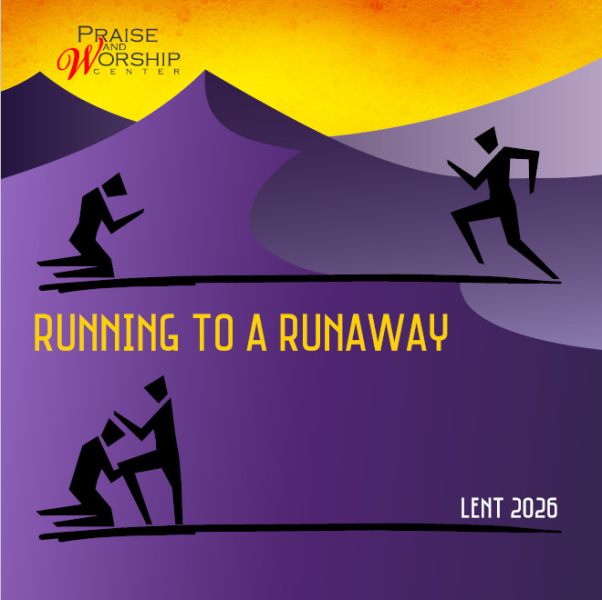
Our Theme Song for Lent 2026 at PWC
|
|
|
|
|
by Phil Wickham
Please see the link below:
|
|
|
|
|
|
|
|
Blood Pressure Checks take place at PWC on the first and third Sundays of the month
from 11:00 a.m. to 11:45 a.m.
Our medical team is providing the blood pressure checks.
|
|
|
|
|
|
At PWC
your tithing & generosity allow us to minister to so many who come through our doors with their spiritual, emotional, and physical needs.
Thank you for your tithing and
commitment to PWC!
From pastoral counseling to grief support, to bible study and adult education, to providing food through Matthew’s Crossing for families who are economically struggling, to Marriage Enrichment and our funeral ministry -- your consistent giving makes a difference, a big change in people’s lives!
|
|
Here are the different ways you can tithe to PWC:
|
|
• Mail in your gift to: Praise and Worship Center, 2551 N. Arizona Avenue, Chandler, AZ 85225.
|
• Sign up for monthly giving with a credit card or voided check. Just call the office at 480-649-0300 or stop by the office.
|
|
|
|
|
|
|
Do you want to be inspired again by Fr. Dale or Pastor Mark? You can listen to Fr. Dale or Pastor Mark’s sermons on our podcast page. Here is the link:
|
|
|
|
|
|
|
|
|
Are you homebound? If so, Deacon John Null can bring you communion. The only exception is if you have or are recovering from COVID. The best way to get in touch with Deacon John is by contacting the church office, at 480-649-0300, and leaving a message.
|
|
|
|
|
|
A Reflection
by Ronald Rolheiser
Putting God on Trial
In both our piety and our agnosticism, we sometimes put God on trial and whenever we do that, it’s we who end up being judged. We see that in the Gospel accounts of the trial of Jesus, particularly in John’s Gospel.
John’s Gospel, as we know, paints a portrait of Jesus from the point of view of his divinity, not his humanity. Thus, in John’s Gospel, Jesus has no human weaknesses whatsoever. He’s God from the first line to the last line of the Gospel. This is true to the tiniest detail. For instance, in John’s Gospel at the feeding of the multitudes, Jesus asks his disciples how many loaves and fishes they have. John notes in brackets: “He already knew.” There are no gaps on a divine radar screen.
We see this most clearly in how John writes up the passion and death of Jesus. Unlike the other Gospels, wherein Jesus is shown as afraid and cringing before his bitter fate, in John’s Gospel, throughout his entire passion journey, Jesus is unafraid, in complete control, serene, carrying his own cross, and the antithesis of a victim. Instead, throughout the whole account, Jesus is someone who is acting freely, out of love, and has complete power over the situation.
John makes this point very strongly: When they come to arrest him, Jesus stands up and all those who are apprehending him fall to the ground so that, in contrast to the other Gospels, it is not he who is prostrate on the ground but rather it’s the Roman soldiers and temple police who are prostrate – and in that prostration symbolically doing him reverence. And the symbolism continues: Jesus is sentenced to death at noon, at the exact hour when the priests began to slaughter the paschal lambs. After his death he is buried with a staggering amount of myrrh and aloes, as only a king would have been accorded, and he is laid in a “virgin” tomb (just as he was born from a virgin womb). John makes it clear that this God we’re dealing with.
With this in mind, namely, that Jesus was always divine and in charge, we will be able to understand more clearly what John is trying to teach in his account of Jesus’ death. What John focuses on most is the trial of Jesus. The bulk of his passion story is centered on the trial and the main characters in that trial. But his account has this ironic twist: Seemingly Jesus is on trial; but, in actuality, he is only the one who isn’t on trial. Pilate is on trial, the religious authorities are on trial, the people are on trial, and we, today, reading the story, are on trial. Everyone’s on trial, except Jesus.
Pilate is on trial on a number of counts: He knows Jesus is innocent but lacks the courage to stand up to the crowd and thus allows the fickle, mindless frenzy of a crowd to have its way. He’s judged for his weakness. But he’s also on trial for his agnosticism, namely, his belief (however sincere) that he could treat truth and faith as realities that he, himself, could steer clear of, that he could assess these from a neutral, non-committed position, and that these were other peoples’ issues, nothing to do with him. But he’s judged for this. Nobody can coolly ask: “What is truth?” as if that answer didn’t affect him or her. Jesus’ trial finds Pontius Pilate and those of us like him, guilty – guilty of agnosticism, a non-involvement, an indifference, that is in the end dishonest. Ironically, Pilate’s weakness in not rescuing Jesus ends up making him perhaps the most famous governor and judge forever in history. With his name in the Christian creeds, millions and millions of people pronounce his name every day.
But Pilate isn’t alone on trial here; so are the religious authorities of the time. In their very effort to protect God from what they deem irreverence, heterodoxy, and blasphemy, they are also complicit in “killing” God. The judgment made against them at Jesus’ trial is the exact judgment that is being made, down to this very day, on a lot of religious and ecclesial authority, that is, its feverous proclivity to protect God often helps crucify God in this world.
Last, not least, Jesus’ contemporaries are also on trial and, with them, so are we. In the heat of the moment, caught up on the mindless, feverous energy of a crowd, they abandon their messianic hope for the slogan of the day: “Crucify him!” How little different from so many of the political and religious slogans we mouth at political and church rallies today. The trial of Jesus is a very harsh judgment on the mindlessness, fickleness, and dangers of crowd energy.
The genius of John’s account of Jesus’ death is that it shows what happens whenever through our misguided religious fervor or through our cool agnosticism we put God on trial. It’s we who end up being judged.
|
|
|
|
|
|
Don’t forget to put the PWC Holy Week activities in your calendar.
Please pray for peace in our world.
|
|
|
|
Love,
Fr. Dale & Pastor Mark
|
|
|
|
|
|
|
Keep up with all your PWC friends on Facebook
|
|
|
|
|
|
Please do not reply to this email;
the sending address is not monitored.
Please reply to: [email protected]
|
|
|
|
|
|
|
|
|
Chris Pfund PhD, MBA, BSN, RN
President Homestead Health
|
|
|
|
phone: (602) 755-4508
fax: (602) 691-0283
|
|
|
|
|
Homestead Health is a 501(c)(3) non-profit dedicated to helping adults live safely and independently at home. We offer a range of in-home and virtual medical services, including concierge medicine, palliative care, transitional care, and geriatric care management. We believe everyone deserves access to compassionate and affordable healthcare.
|
|
|
|
|
|
|
|
|